The current era produces “quick fixes” that have become standard solutions for health problems, but this leads patients to experience continuous symptom management without reaching complete recovery. Homoeopathy provides a total system change which establishes its own treatment approach.
Homoeopathy functions as a medical system that has existed for 240 years to treat complete diseases rather than just their specific symptoms. Homoeopathy uses its system of medicine to treat patients by recognising how physical, mental and emotional aspects interact to create total health. This article will explain How Homoeopathy Treats the Root Cause of Disease.
Understanding the Root Cause in Homoeopathy
Medical practice identifies disease origins through two main methods, which include discovering infectious agents and studying body function abnormalities that lead to conditions such as high blood sugar. Homoeopathy provides additional insight about these conditions because it analyses their root causes, which exist within a person’s body system. The body requires Vital Force energy for its functions to operate properly.
Homoeopathic philosophy considers Vital Force to be the essential force that maintains human health. The body develops illnesses when this life energy experiences disturbance because of stress and environmental toxins, and genetic miasms. Homoeopathy treats the disruption of this force, rather than just the physical damage it leaves behind.
How Homoeopathy Differs from Conventional Medicine
To understand why homoeopathy is effective for long-term health and Treats the Root Cause of Disease, it is essential to compare it to the standard symptom-based model.
| Feature |
Conventional Medicine |
Homeopathy |
| Focus |
Symptom suppression (anti-pyretics, anti-inflammatories) |
Root cause eradication |
| Approach |
One-size-fits-all (Standard protocols) |
Individualized treatment |
| Philosophy |
Treating the part (Organ-specific) |
Holistic approach (Body, Mind, Spirit) |
| Dosage |
High physiological doses |
Minimum dose (Potentization) |
The Core Principles of Homoeopathic Treatment
The tiny sugar pill (Homoeopathic Treatment) serves as a treatment for a permanent medical condition that exists deep within your body. The principle which governs this system operates according to three scientific laws, which Dr Samuel Hahnemann established.
1. Like Cures Like (Similia Similibus Curentur)
The main principle that governs homoeopathy states that a substance which produces symptoms in a healthy individual will serve as a treatment for those same symptoms in an ill patient. Allium cepa, which comes from red onion, produces a combination of watery eyes and a runny nose. This substance serves as the main treatment for both hay fever and colds.
2. The Law of the Minimum Dose
Homoeopathic remedies undergo potentisation, a process of serial dilution and succussion (vigorous shaking). The process captures the energetic essence of the substance while it reduces the possibility of side effects.
3. Individualised Treatment
Homoeopathy treats two patients who share the same clinical diagnosis (e.g., migraine) with distinct remedies. The person requires a remedy because grief triggers their pain, while the other person needs one because their pain arises from sun exposure. This personalised medicine ensures the root cause, unique to the individual, is addressed.
Treating Chronic Diseases at the Root
Homoeopathy achieves its highest success rate through the treatment of chronic diseases. The body loses its ability to heal when a disease becomes chronic.
- Autoimmune Disorders: Homoeopathy provides an alternative to autoimmune disorder treatment, which requires immune system suppression, because it restores normal immune function.
- Skin Conditions: Eczema and psoriasis are treated as skin conditions that result from internal body toxins attempting to exit through the skin. Homoeopathy heals the internal “leak” so the skin can clear up naturally.
- Mental Health: Medical professionals treat anxiety and depression as chemical imbalances that stem from the complete life history and personality of each patient.
Frequently Asked Questions (FAQs)
Is homoeopathy slower than conventional medicine?
While acute conditions (like a fever or injury) can respond very quickly, chronic conditions may take longer. This is because homoeopathy is “undoing” layers of imbalance built up over the years. It is a process of deep-acting healing, not a temporary mask.
Can I take homoeopathic medicines along with my current prescriptions?
Yes. Homoeopathic remedies are highly diluted and do not typically interfere with the chemical action of allopathic drugs. However, always consult with a professional homoeopath to manage the transition and monitor progress.
Does homoeopathy have side effects?
Because of the Law of the Minimum Dose, homoeopathic remedies are non-toxic and safe for infants, pregnant women, and the elderly. Occasionally, a “healing crisis” (a temporary slight increase in symptoms) may occur, which signals that the body’s vital force has been activated.
Why is a homoeopathic consultation so long?
A first consultation can last 60–90 minutes. The homoeopath needs to understand your sleep patterns, food cravings, emotional triggers, and family history to find the single remedy that matches your unique “root cause” profile.
Is there scientific evidence for homoeopathy?
Yes, thousands of clinical trials and observational studies exist. While the mechanism of “nanomedicine” in homoeopathy is still being explored by modern physics, the clinical results in treating lifestyle diseases and susceptibility patterns are well-documented.
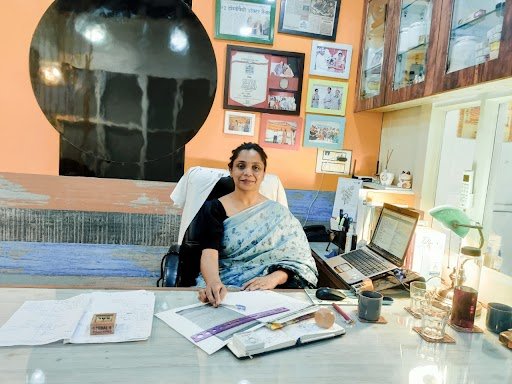
About Dr. Aditi
A Gold Medalist in Homoeopathy, Dr Aditi completed her DHMS and BHMS, followed by post-graduation in Homoeopathy from London. From her college years, she exhibited outstanding academic brilliance and a deep passion for reference-based, classical learning - skills that later became the cornerstone of her clinical precision.
She began practising immediately after completing her DHMS and later served as a House Physician and Medical Officer at a reputed Homoeopathic Medical College and Hospital. In 2008, she was selected as a Medical Officer with the Punjab Government, but chose to continue independent practice to remain committed to pure classical homoeopathy and individualised patient care.