
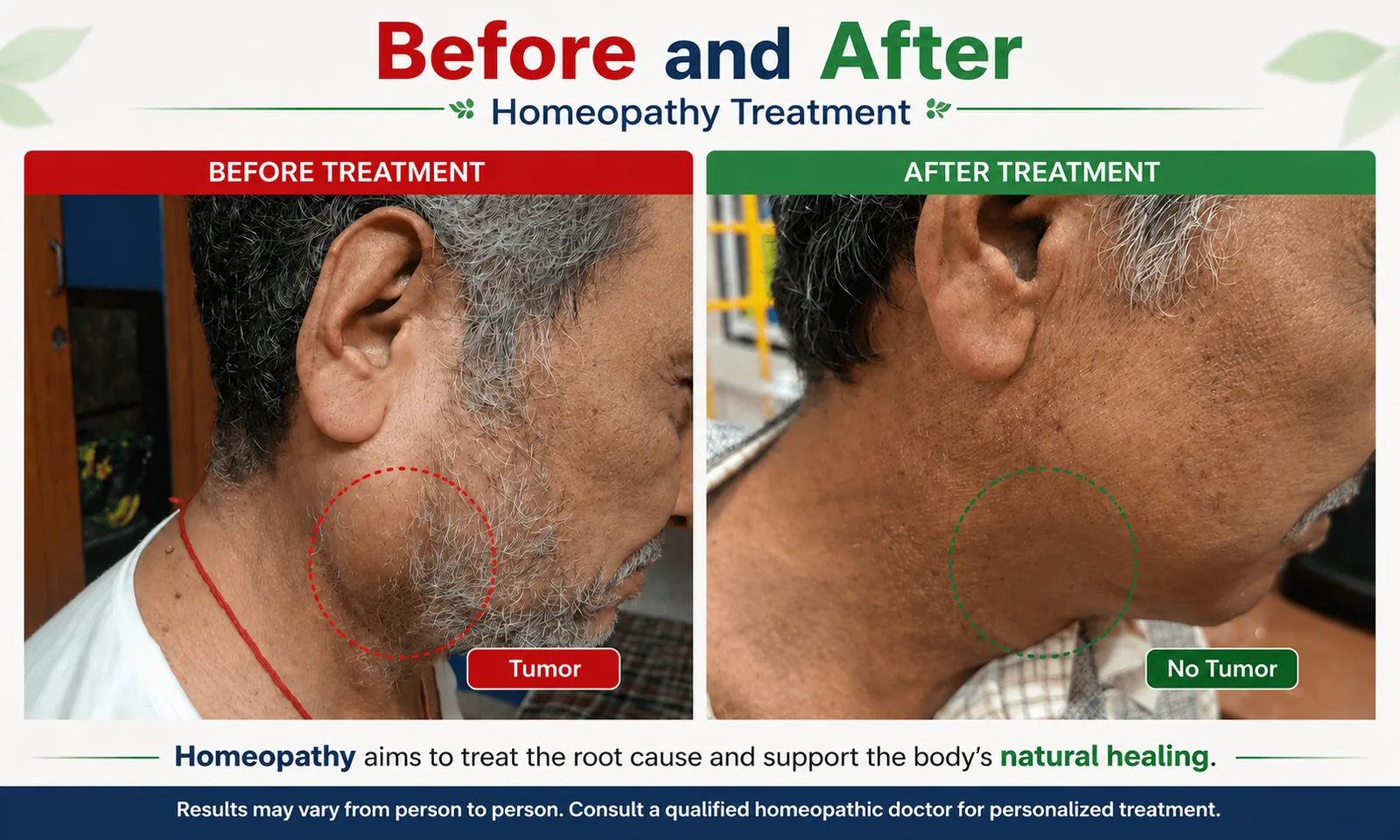
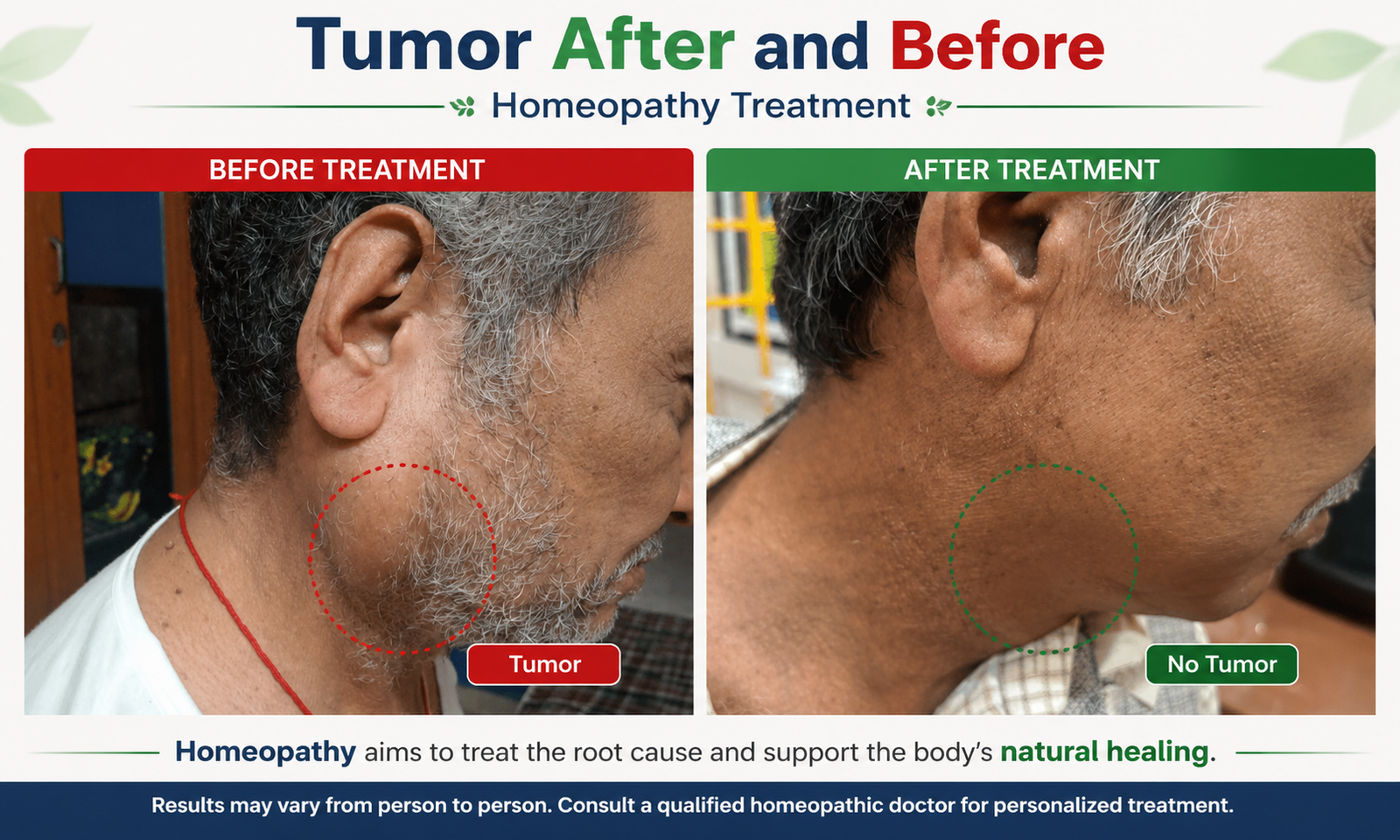
Warthin’s tumor — a typically benign parotid gland neoplasm — is rarely managed without surgical intervention. This case documents a 66-year-old male patient, Mr. Pan Singh, who presented with bilateral parotid swelling and had been advised immediate surgery at a government tertiary care hospital. Through a detailed constitutional homeopathic approach under Dr. Aditi, significant clinical improvement was achieved within 40 days, with surgery successfully averted.
Patient Profile at a Glance
| Patient Name | Mr. Pan Singh |
| Age / Gender | 66 Years / Male |
| Diagnosis | Bilateral Warthin’s Tumor (Parotid Glands) |
| Referred From | Govt. Medical College & Hospital, Sector 32, Chandigarh |
| Surgical Advice | Immediate surgery advised — successfully averted through homeopathic management |
| Treating Physician | Dr. Aditi — AllHomoeo.com |
Presenting Complaints
Mr. Pan Singh presented with the following chief complaints at the time of first consultation:
- Severe bilateral swelling in both parotid gland regions
- Intense pain with marked stiffness in the neck and jawline
- Significant difficulty in daily activities due to discomfort and restricted movement
Medical & Personal History
| Diabetes Mellitus | Diagnosed 3 years prior — on active medication |
| Surgical History | History of cholecystectomy (gall bladder removal) |
| Digestive Complaints | Chronic dyspepsia and acidity |
| Smoking History | Long-standing heavy smoker — 15 to 30 cigarettes per day |
| Physical Constitution | Well-built with an active personality; premature greying of hair |
| Bowel Habits | Mild constipation |
| Food Preferences | No marked food desires or aversions |
Note: The history of heavy tobacco use (15–30 cigarettes/day) is clinically significant. Bilateral Warthin’s tumor has a well-established etiological association with long-term smoking. Smoking cessation was therefore identified as a central therapeutic target alongside homeopathic prescribing.
The Case — Complexity and Background
Mr. Pan Singh’s case presented several layers of clinical complexity. Having been advised immediate surgery at a government tertiary care centre, the patient sought a non-surgical alternative. The bilateral nature of the tumor — uncommon in general but strongly associated with tobacco use — made careful case-taking and constitutional analysis essential.
The presence of diabetes mellitus added a systemic dimension requiring dietary and lifestyle regulation. The chronic dyspepsia and history of cholecystectomy indicated a longstanding constitutional weakness in the digestive and hepatobiliary sphere — factors that are significant in homeopathic case analysis.
Our Homeopathic Approach
A detailed constitutional case-taking was conducted by Dr. Aditi, following the principles of classical individualised homeopathy.
 The prescription was not based on the diagnosis alone but on the totality of the patient’s physical, mental, and lifestyle profile.
Areas Covered in Case-Taking
- Physical generals — constitution, thermals, energy levels, bowel habits, sleep
- Mental and emotional state — personality, stress response, emotional temperament
- Lifestyle patterns — with particular focus on the heavy smoking habit
- Miasmatic background — chronic disease tendency analysis
Supportive Management Prescribed
- Dietary regulation — balanced, low-glycemic diet suited to diabetic background
- Lifestyle correction — activity modification and routine regulation
- Strong emphasis on complete smoking cessation — addressed in every follow-up
Follow-Up Timeline and Progress
Progressive improvement was documented across multiple follow-up visits spanning approximately three months from the initiation of homeopathic treatment:
| Timepoint | Milestone | Clinical Notes |
| Day 7 | Initial Relief | Subtle but encouraging reduction in symptom intensity; patient noted early improvement |
| Day 10 | Unilateral Improvement | Noticeable reduction in swelling on one side — asymmetric response confirmed |
| 1st September 2025 | Continued Progress | Further improvement documented; swelling still present and firm; pain ongoing but reduced |
| Post-Remedy Adjustment | Remedy Refined | Prescription adjusted based on updated symptom picture; continued steady improvement observed |
| Day 40 | ~70% Relief | Approximately 70% relief in both pain and swelling — a significant clinical milestone reached |
| 29th November 2025 | Near-Complete Recovery | Swelling markedly reduced; pain fully resolved; patient comfortable and fully active; smoking completely ceased |
Final Outcome
Over approximately three months of consistent homeopathic treatment, the results were clinically significant:
| Clinical Results | Patient Wellbeing |
|
|
Key Insights from This Case
This case demonstrates what becomes possible when a complex surgical case is approached with careful constitutional homeopathic analysis. Several important clinical lessons emerge:
| 1. | Bilateral Warthin’s tumor is directly linked to chronic tobacco use — cessation is both therapeutic and preventive, and must be a non-negotiable part of management. |
| 2. | Constitutional prescribing based on the totality of symptoms — physical, mental, and lifestyle — produces deeper and more durable results than symptomatic treatment alone. |
| 3. | Diabetes, dyspepsia, and cholecystectomy history together suggest a chronic constitutional weakness in the digestive-hepatic axis, which guided the remedy selection. |
| 4. | Progressive remedy adjustment based on evolving symptom picture is essential — no fixed protocol works in complex cases. |
| 5. | Surgery avoidance in a benign condition is a realistic and documented outcome when individualised homeopathy is applied systematically under proper supervision. |
Important Clinical Note
| Medical Advisory
Warthin’s tumor is typically a benign condition, but requires formal histopathological confirmation and specialist evaluation before any management decision is made. Surgical evaluation remains the standard of care. Patients must not delay or avoid surgical consultation without medical guidance. This case is presented to highlight the role of individualised homeopathy as a supportive and alternative approach under proper clinical supervision — not as a general recommendation against surgery. |
Conclusion
Mr. Pan Singh’s case is a clear example of what individualised constitutional homeopathy can achieve when applied carefully in a complex, multifactorial surgical case. The progressive, documented improvement across all parameters — swelling, pain, functional capacity, and quality of life — along with the patient’s successful smoking cessation, reflects the depth of the homeopathic approach.
When the right remedy meets the right patient, and when it is supported by disciplined lifestyle change, outcomes that conventional medicine considers unlikely become achievable.